
Why a Boundary Survey Matters Before Rezoning Changes Reach Your Street
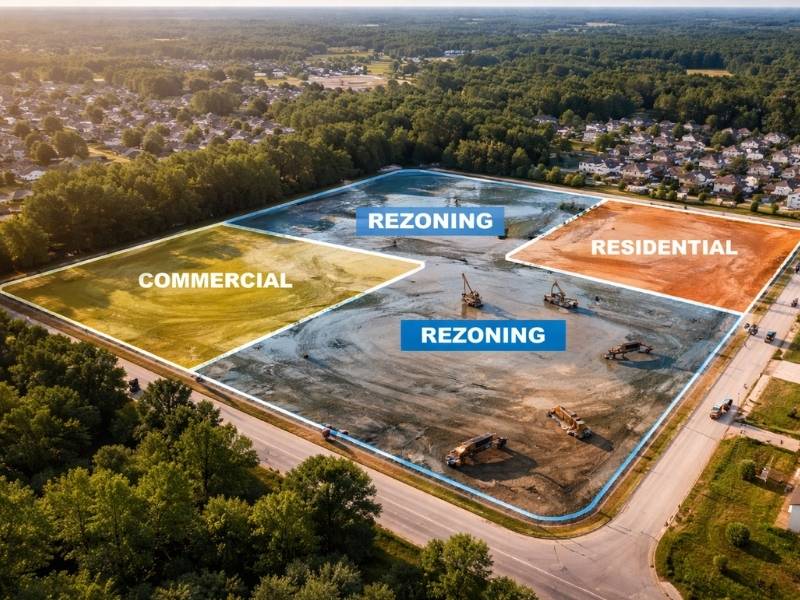
Zoning rules change more often than people think. Getting a boundary survey before rezoning reaches your street shows exactly where your land starts and ends. For developers, that line on paper is money. When the city rezones a parcel near you for higher density or commercial use, the limits on your own site can shift too. You can’t plan around a change you can’t measure. Know your true lines first, and you stay ahead of every neighbor who’s still guessing.
Rezoning Can Change More Than the Property Next Door
Rezoning resets the rules for a whole area, not one lot. When a nearby parcel moves to higher density or commercial use, the traffic, drainage and building heights around you can change. That’s why you want to know where your lines sit before the first new project starts.
New districts can allow taller buildings and more units close to you. Parking and access demands climb. Your own buildable area depends on your exact lines, so fuzzy boundaries leave you guessing. A clear survey lets you see how a neighbor’s project crowds your plans.
Accurate Property Lines Help Evaluate Future Development Impacts
A boundary survey gives you exact numbers you can trust. Owners, planners and lenders all lean on those numbers when a change is on the table. Real numbers let you see how a rezoning hits your land. You won’t have to guess from a tax map.
Tax maps and county GIS layers are rough drawings. They aren’t legal lines. A licensed survey shows your real corners and true size. With that, you can run real numbers and see if a new setback cuts into your land. Planners and boards trust a stamped survey when you speak at a hearing.
Old Fences and Assumed Boundaries Can Create Problems
Fences, hedges and driveways rarely sit on the true line. People build where it’s easy, not where the deed says. When development heats up nearby, neighbors notice those small gaps fast.
A fence might sit two feet inside your line, or two feet over it. Either way, you lose track of what you actually own. When a neighbor rebuilds and surveys their side, the gap shows up. A current boundary survey catches the problem before it stalls your permit or your sale.
Access, Easements and Shared Features Deserve a Closer Look
Shared driveways, utility easements and access points matter more when the lots around you change. A new project next door can reroute traffic, cut into a shared drive or add new utility lines. Your survey shows what rights cross your land and what you rely on.
Say you reach your site through a neighbor’s drive. If they rebuild, that access could move or shrink. Recorded easements bind the next owner, but a casual handshake deal does not. A survey maps what sits in the public record, so you can confirm your access holds when the project next door breaks ground.
Knowing Your Boundaries Makes Future Decisions Easier
Current survey data makes every next move faster. Expansions, sales, negotiations and zoning responses all need accurate lines. When you already hold a recent boundary survey, you can act while slower owners wait on fieldwork.
At a rezoning hearing, you can point to exact impacts on your land and setbacks. In a sale, a clean survey saves weeks of review. In a line dispute with a neighbor, facts win and opinions don’t. Order the survey before you need it, and you turn a slow scramble into a quick decision.
Frequently Asked Questions
How recent should a boundary survey be before a rezoning hearing?
Fresh data carries the most weight. Aim for a survey that reflects the property as it stands today, with no new structures or splits since the fieldwork. If years have passed or the land has changed, order an update before you present.
Can a rezoning next door move my property lines?
No. Your lines come from the deed and the recorded survey, not the zoning map. A rezoning changes what neighbors can build, not where your corners sit. Still, the change can affect your value and your plans, so accurate lines help you respond.
Why can’t I just use the county tax map for planning?
Tax maps and GIS parcels are just estimates for billing. They skip the detail a real project needs. A field survey by a licensed pro pins your true corners and size. That’s what planners and lenders accept.
I already have an old survey. Do I need a new one?
Maybe. If nothing has changed and you didn’t sell off any land, an older survey may still hold. If a fence moved, a structure went up or a neighbor redeveloped, get an update. A current drawing protects you during a deal or a dispute.
How does a shared driveway affect my plans when a neighbor rebuilds?
A shared drive runs on rights the record spells out, or it doesn’t. If your access sits on a recorded easement, it travels with the land. If it rests on an old verbal deal, a neighbor’s rebuild can put it at risk. Check the survey before you count on it.
