
Why a Due Diligence Survey Can Expose Hidden Site Risks
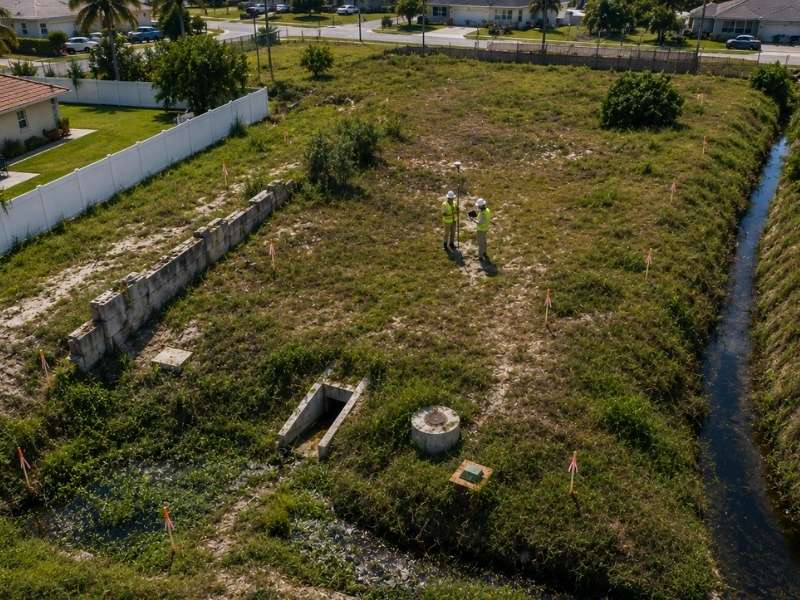
A due diligence survey can turn up problems that no amount of paperwork review will catch. Developers trust title reports and disclosure forms, but those documents only show what someone chose to record. A survey shows what’s actually there.
Here’s what a due diligence survey uncovers, and why skipping it costs more than the survey itself.
How Unrecorded Site Conditions Can Change a Buyer’s Risk Profile
Title reports pull from recorded documents. But plenty of site conditions never make it into county records. A retaining wall built without a permit. A drainage ditch dug decades ago. A neighbor’s shed that’s crept onto the property over the years.
None of that shows up in a title search. A due diligence survey walks the actual land and documents what’s physically there, not just what’s on paper. That gap between recorded history and ground truth is where risk hides.
What to do:
- Order the survey before finalizing your offer, not after.
- Ask the surveyor to note any physical improvement that isn’t backed by a permit or recorded document.
- Compare the survey findings against the seller’s disclosure statement line by line.
Why Easement Conflicts Often Surface During Survey Review
Easements grant someone else the right to use part of your property, even after you own it. Utility companies, neighboring owners, and local governments all hold these rights in different situations. Some unrecorded easements are recorded clearly. Others are vague, outdated, or conflict with what’s actually built on the site.
A due diligence survey maps every known easement against the physical layout of the property. When a building sits too close to a utility easement, or when two easements overlap in a way nobody caught, the survey is what catches it.
What to do:
- Request a full easement list from the title company before the survey starts.
- Have the surveyor plot each easement against existing structures and planned construction.
- Flag any easement that limits where you can build before you commit to a design.
How Access Limitations Can Affect Future Development Plans
A landlocked parcel, or one with limited legal access, can quietly wreck a development plan. Maybe the only road access crosses someone else’s land through an old agreement. Maybe that agreement was never properly recorded. Maybe it expired years ago and nobody noticed.
Access problems don’t always show up until a developer tries to bring in equipment or utilities. A due diligence survey checks whether legal access exists, and whether that access is wide enough and stable enough for what you’re planning to build.
What to do:
- Confirm legal access is recorded, not just assumed from years of use.
- Check access width against your equipment and construction needs early.
- Get any informal access arrangement put into a written, recorded agreement before closing.
What Utility Corridors Reveal About Buildable Land Area
Utility corridors eat into buildable space more than most developers expect. Water lines, gas lines, and power corridors often carry setback requirements that shrink the usable footprint of a lot. Some of these corridors are marked. Many aren’t, especially on older properties where utility placement predates current mapping standards.
A due diligence survey identifies these corridors and shows how much land they actually remove from your development plans. That number is often smaller than what the raw acreage suggests.
What to do:
- Ask the surveyor to mark all utility corridors, not just the ones listed in public records.
- Calculate true buildable area after subtracting utility setbacks, not before.
- Contact utility companies directly to confirm corridor width if the survey shows anything unclear.
Why Survey Exceptions Matter Before Closing or Funding
Survey exceptions are the specific issues a surveyor flags as needing resolution before the deal moves forward. Lenders and title companies pay close attention to these. An unresolved exception can delay funding, or in some cases, kill the deal entirely.
Common exceptions include boundary discrepancies, unrecorded easements, and encroachments the survey turns up. Ignoring them doesn’t make them disappear. It just moves the problem to a worse point in the process, usually right before closing.
What to do:
- Review every survey exception with your attorney before signing anything.
- Ask the seller to resolve major exceptions as a condition of the sale.
- Share the survey with your lender early so funding isn’t delayed by a last minute exception review.
What This Means for Your Next Deal
A due diligence survey does more than confirm boundary lines. It can expose zoning overlay conflicts, plat discrepancies, hidden drainage obligations, restrictive covenants, and certification gaps that affect your title coverage. Catching these early costs a lot less than fixing them after closing. Order the survey with these specific risks in mind, and read every flag it raises before you sign.
Frequently Asked Questions
How is a due diligence survey different from a standard boundary survey?
A due diligence survey typically covers more ground, including easements, access rights, utility corridors, and physical site conditions, not just the property lines themselves.
Can a due diligence survey affect my ability to get financing?
Yes. Lenders often review survey exceptions closely, and unresolved issues can delay or even block funding until they are addressed.
What happens if a due diligence survey finds an issue after I have already signed a purchase agreement?
Most agreements include a due diligence period specifically for this reason. Issues found during that window can usually be negotiated or used to exit the deal.
Do I need a due diligence survey if the seller already provided one?
It depends on how recent it is and who ordered it. Many buyers get their own because a seller’s survey may not reflect specific development plans.
How long does a due diligence survey usually take to complete?
It varies by site complexity, but most take one to three weeks. Sites with unclear easements or access history often take longer.
