
Find Property Lines Before Your Neighbor Builds a Fence
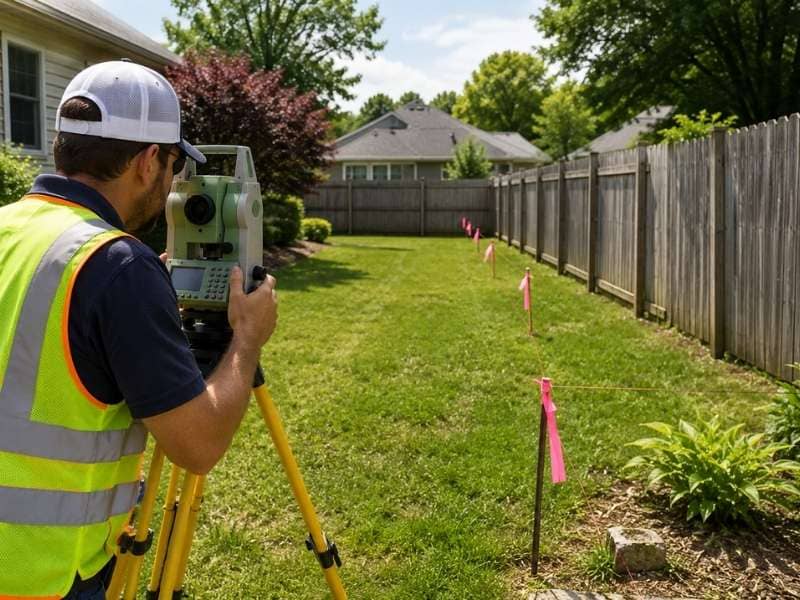
When a neighbor plans a fence, you’ll want to find property lines before the first post goes in. A fence sets a visible edge, and once it’s built, a wrong line gets harder to fix. The good news is you have several ways to check the boundary yourself. Some are quick and free, while others need a professional. Knowing your options helps you act before the fence locks anything in place.
Why Finding Your Lines Matters When a Neighbor Builds
A neighbor’s fence can affect your land more than you’d expect. If they build on a guess, the fence might creep onto your side or push your usable space inward. Once it’s their structure on the ground, sorting it out gets touchy and slow. Acting before the build keeps the conversation friendly and the options open.
There’s also a record problem to think about. A fence that sits in one spot for years can blur where people believe the line runs. That false memory can cause trouble later, during a sale or a future project. Pinning down the real boundary now protects you from that drift.
Simple Ways to Start Finding Your Property Lines
You can gather useful clues on your own before calling anyone. A few basic sources give you a rough picture of where your lines fall.
Start with these:
- Your deed, which holds the legal description of the land
- The recorded plat or subdivision map for your lot
- Your county’s online property maps, often called GIS maps
- Metal pins or markers buried at the corners of the lot
- Any older survey you received when you bought the home
Each source adds a piece to the puzzle. Together they can show you roughly where the boundary sits. That’s often enough to start a calm talk with a neighbor, even if it isn’t the final word.
Where Do-It-Yourself Methods Fall Short
These free tools have real limits, and it helps to know them. Online maps are handy, but they’re not precise enough to mark an exact line on the ground. The pictures can be off by several feet, which is plenty to cause a fence dispute. So treat them as a guide, not a final answer.
Older neighborhoods make things trickier. Records there can be decades old, and time may have buried, moved or erased the original markers. Old fences add to the confusion, since people often assume the fence is the line. When the records are messy or the pins are missing, do-it-yourself checks can only take you so far.
When to Bring in a Surveyor
For a line you can trust, a licensed surveyor is the answer. They confirm the legal boundary and mark it on the ground with stakes you can see. That result carries weight that a screenshot or a hunch never will. If a fence is about to go in, that certainty is worth the cost.
A survey also gives you something solid to share. You can show your neighbor a marked line instead of an opinion. That tends to settle questions fast and keeps a small disagreement from growing. When a structure is about to go up, the professional answer is the safe call.
Talking to Your Neighbor Before the Fence Goes Up
The best time to talk is before the fence is built, not after. Share what you’ve found in a friendly, low-key way. Most neighbors would rather get the line right than redo the work later. A calm heads-up often prevents the whole problem.
If the two of you still disagree, a survey settles it with facts. Once a marked line exists, there’s little left to argue about. You can then plan the fence together, each side knowing exactly where it belongs. That shared clarity is what keeps a fence from turning into a feud.
Frequently Asked Questions
How can I find property lines?
Start with your deed, your plat and your county’s online property maps. Then look for metal pins at the corners of your lot. For an exact, reliable line, a licensed surveyor is the surest route.
Are online property maps accurate enough to use?
They’re great for a rough idea, but not for an exact line. These maps can be off by several feet, which matters a lot near a fence. Use them to get oriented, then confirm the real line another way.
What if my neighbor and I disagree about the property line?
First, compare what each of you has, like deeds, plats or old surveys. If that doesn’t settle it, a licensed surveyor can mark the true line. A marked boundary usually ends the debate and lets you both move on.
Can I find my property lines for free?
You can get close for free using your deed, public records and online maps. Those sources show the rough shape of your lot at no cost. They just can’t replace a surveyor when you need an exact, legal line.
Who can help me find property lines?
A licensed land surveyor is the main professional for this job. Your county recorder or assessor office can also supply deeds, plats and maps. For anything you plan to build on, the surveyor’s marked line is the one to trust.
