
How Long Does a Property Survey Stay Valid Before You Should Order a New One
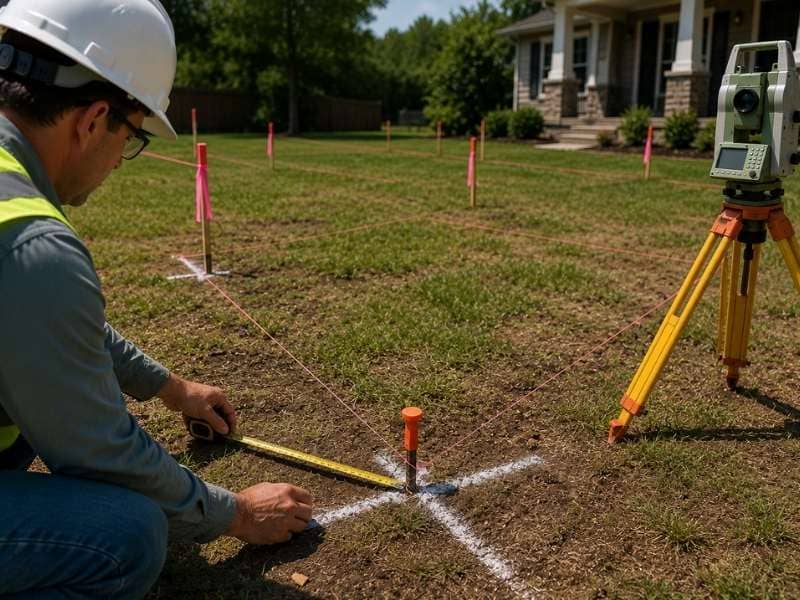
A property survey doesn’t come with an expiration date stamped on it. That surprises a lot of homeowners. Many assume a survey goes stale after a certain number of years, the way a driver’s license or a food label does. But that’s not how it works. Whether an existing property survey still holds up depends on what has changed on the land, what you plan to use the survey for, and who needs to rely on it.
Knowing the difference between a survey that’s still good and one that needs updating prevents delays and avoids expensive surprises.
Why Age Alone Does Not Determine Whether a Survey Is Still Reliable
A survey completed fifteen years ago might still be perfectly usable. One completed three years ago might already be out of date. The age of the document matters far less than the condition of the property and the boundary evidence currently on the ground.
A survey captures a specific moment in time. It shows where the boundaries were, what improvements existed, and where the physical markers sat when the surveyor finished the work. If nothing has changed since then, the information may still be accurate.
But “nothing has changed” covers more ground than most homeowners expect. It includes the physical condition of the property, the state of the boundary markers, any structures or improvements added since the survey date, and whether the legal description of the property has been changed through a deed revision or subdivision. If all of those things remain the same, an older survey can still serve its purpose.
Changes on the Property That Can Make an Older Survey Less Useful
Physical changes are the most common reason an existing survey stops being reliable. A survey only shows what was there when it was made. Anything added or changed after that date simply doesn’t appear on the document.
Common improvements that can affect whether an older survey is still useful include:
- New structures. A garage, shed, or any detached building added after the survey date won’t appear on the existing document. If the location of that structure matters for a permit, a sale, or a dispute, the survey will be missing key information.
- Fences and walls. A fence installed along what someone thought was the property line may or may not match where the boundary actually is. An older survey won’t show that fence or confirm whether it was placed correctly.
- Driveways and paving. Paved surfaces built near a boundary line can raise questions about whether they cross onto a neighboring property. If a driveway was extended after the survey was done, that change won’t appear on the record.
- Grading and landscaping near boundary lines. Retaining walls, raised planting beds, and significant grading near the edges of a property can alter how the land looks. These changes may not affect the legal boundary, but they often come up during real estate transactions and permit reviews.
None of these improvements move the boundary lines. But they do create gaps between what the survey shows and what currently exists on the ground, and that gap can create problems when others need to use the document.
Why Different Transactions May Have Different Survey Requirements
Not every use of a survey comes with the same standards. A homeowner pulling out an old survey to settle a question about a fence line has different needs than a lender processing a refinance or a title company issuing insurance for a sale.
Lenders often have their own rules about survey age. Some accept an existing survey if it meets certain conditions. Others require a new or updated survey that confirms the boundaries and improvements haven’t changed since the original was completed. These rules vary by lender, loan type, and sometimes by state.
Title companies face a similar situation. When issuing title insurance, a title company needs confidence that the survey reflects the current state of the property. An older survey that doesn’t account for recent improvements may not give them that confidence.
Buyers in a real estate transaction sometimes request an updated survey as part of their review process, even when an existing one is available. Seeing current conditions documented clearly gives them a more accurate picture of what they’re purchasing.
The safest approach is to confirm what each party actually requires before assuming an older survey will be accepted.
How Missing Boundary Markers Affect Older Surveys
Even when a property hasn’t changed physically, the markers used to establish its boundaries can deteriorate over time. Corner markers get buried under years of soil buildup and landscaping. They get knocked loose by equipment working on a neighboring lot. In some cases, they get removed by someone who didn’t know what they were.
When a licensed surveyor returns to a property to verify an older survey or perform a new one, part of the work involves finding the original monuments. If those markers are missing or disturbed, the surveyor has to reconstruct the boundary using other evidence, including deed records, neighboring surveys, and any remaining physical points that can be tied back to the original measurements.
This process takes more time when the evidence is incomplete. It can also affect how confident anyone can be in the results. A boundary established from strong, intact evidence is far more reliable than one pieced together from partial information.
If the corner markers on a property can’t be located, that alone is a good reason to have the situation assessed by a licensed surveyor.
Questions Worth Asking Before Reusing an Existing Survey
Before deciding whether an older survey is good enough for a current purpose, a few questions help clarify the answer:
- Has anything been built, added, or changed on the property since the survey date?
- Are the original corner markers still visible and in place?
- Who will be relying on the survey, and do they have specific requirements about how recent it needs to be?
- Has the legal description of the property changed through a deed revision, lot split, or boundary adjustment?
- What will the survey actually be used for?
If the answers to any of these raise doubts, a licensed surveyor can review the existing document and give an honest assessment of whether it still reflects current conditions or whether updated fieldwork makes sense.
Frequently Asked Questions
How long can a property survey be used?
A property survey can remain useful for many years if the land hasn’t changed and the boundary markers are still intact. There is no universal expiration date. What matters is whether the document still accurately reflects the current condition of the property and whether the party relying on it will accept it.
Will a lender accept an older property survey?
Some lenders will, and some won’t. Requirements vary by lender, loan type, and state. The straightforward way to find out is to ask the lender directly before assuming an existing document will work for a current transaction.
Do home improvements affect whether an existing survey is still usable?
Yes. Any structure, fence, driveway, or significant grading change added after the survey date won’t appear on the existing document. If that information matters for the current purpose, an updated survey may be needed to show what’s actually on the property today.
What should I do if I can’t find the corner markers on my property?
Missing corner markers are a good reason to contact a licensed land surveyor. They can assess whether the original monuments still exist, whether they can be located using other evidence, and whether updated fieldwork is needed to establish or confirm the boundary.
