
Why Developers Use Drone Mapping Services for Erosion Control Tracking
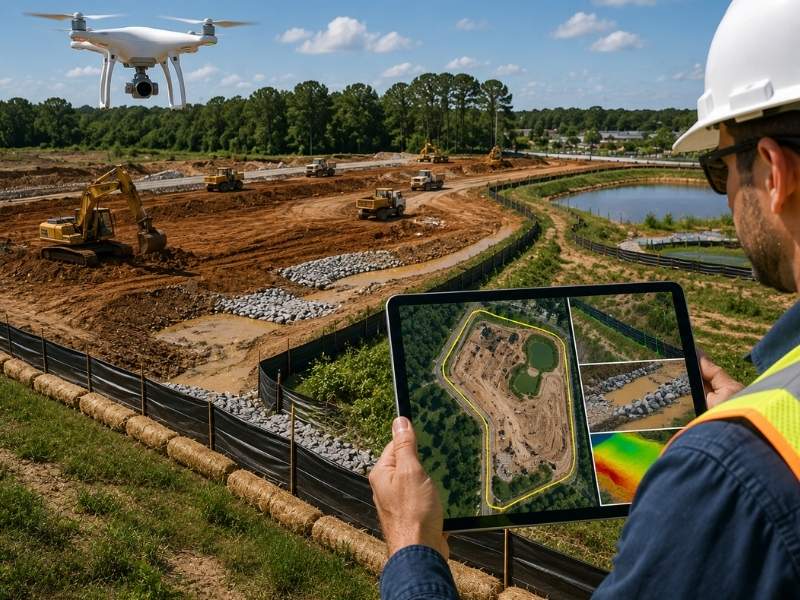
Soil erosion is a real problem on construction sites. When the ground gets cleared and graded, there’s nothing left to hold the soil in place. One heavy rain can wash it into nearby roads, streams, or storm drains. Developers need a way to watch what’s happening across the whole site. That’s why many of them now use drone mapping services. Drones fly over the site, take photos, and help teams catch erosion problems early, before they get out of hand.
Why Do Developers Use Drone Mapping for Erosion Control?
Developers use drone mapping services to take aerial photos and collect ground data on a regular schedule during construction. This helps them find erosion problems early, see how much land has been disturbed, make sure erosion controls are set up correctly, and keep records for permits and inspections.
How Drones See Things That Workers on the Ground Can’t
A worker walking around a large construction site can only see one area at a time. On a big site, some spots may not get checked for weeks. Slopes on the far side of the property, ditches near digging zones, and bare patches between work areas often get skipped.
Drone surveys solve that problem. One drone flight covers the whole site and takes clear photos from above. Those photos show soil building up near drainage areas, erosion barriers that got knocked over by rain, and bare ground that’s at risk. Teams can look at photos from different weeks and see exactly what changed.
A 2022 report from the American Society of Civil Engineers found that construction sites send way more soil and mud into nearby waterways than most people realize. Most of that can be stopped when erosion controls get checked and fixed throughout the project, not just once or twice.
What Drone Photos Show During Active Digging and Grading
The riskiest time for erosion is when active digging and grading are happening. The grass and plants are gone, the ground is cut open, and rain moves across the site in ways it never did before. A lot can change in just one week.
Drone mapping takes photos and creates surface maps that show what the ground looks like right now. Teams can see where soil is piling up and where it’s washing away. That tells them where to move a barrier, add rocks to slow the water, or put down ground cover before the next storm.
Research from the Journal of Field Robotics found that drone surface maps can be accurate to within a few centimeters. That’s more than good enough to track where erosion controls are placed and whether they stay there.
Using Drone Photos to Check That Erosion Controls Are in Place
Putting up erosion controls is the first step. Making sure they cover all the right spots is just as important. On busy sites with different crews working in different areas, it’s easy for some spots to get missed.
Drone photos let project managers look at the whole site at once. Silt fences, rock barriers, inlet covers, and erosion blankets all show up clearly from above. Teams can compare what they see in the photos against their erosion control plan. If something is missing or out of place, they can fix it before an inspector finds it.
This kind of check is most useful right before and after big storms, when barriers are most likely to shift or fall apart.
How Drone Photos Help With Permits and Inspections
Most construction projects that dig up more than one acre of land need a stormwater permit from the EPA. That permit requires regular site checks, written notes, and records of any fixes made.
Written notes work, but photos tell a clearer story. Drone photos with dates, paired with site maps from each survey, create a stronger paper trail. If a government inspector ever reviews the project, dated aerial photos are much easier to back up than handwritten notes.
Some state agencies now accept drone data as part of the official inspection record, which shows how common drone mapping has become on bigger projects.
Tracking Erosion Controls as the Project Moves Forward
Big construction projects happen in stages. Each stage brings new digging, new areas of bare ground, and new risks. Drone mapping helps teams keep track across all of them.
Before a new stage starts, the team looks at current drone photos alongside older ones. That shows what ground is still exposed, whether earlier erosion controls are still working, and what needs fixing before new digging begins.
This record also helps when the project switches contractors or when a permit gets transferred. The photos give everyone a clear look at what the site looked like at each point, cutting down on arguments about who was responsible for what.
The Best Times to Run a Drone Survey
Drone surveys help at every point in a project, but some moments matter more than others. The most important times to fly a survey are:
- When the site is first cleared and all ground cover is removed
- While active digging is happening and the land is changing fast
- Right after heavy storms, when barriers may have shifted or broken
- Before the project wraps up, to confirm the whole site is stable
Flying a drone at each of those times builds a record that covers the moments when erosion risk is highest.
Frequently Asked Questions
Why do developers use drone mapping services for erosion control tracking?
Developers use drone mapping services to monitor site conditions, document changes over time, and maintain accurate records of erosion control measures throughout a project.
How does drone mapping help track changing site conditions during construction?
Drone mapping captures current aerial imagery and site data that allow project teams to compare conditions between survey dates and observe how construction activities affect the landscape.
Can drone mapping services document erosion control measures over time?
Yes.Regular drone surveys create a visual history of the site, making it easier to track the location and condition of erosion control features throughout different construction phases.
What types of projects benefit from drone mapping for erosion control tracking?
Residential developments, commercial projects, industrial sites, utility corridors, and large-scale land development projects can all benefit from drone mapping to monitor site conditions and support project oversight.
What information can drone mapping provide for erosion control management?
Drone mapping can provide aerial imagery, site-wide views, surface condition documentation, disturbed area measurements, drainage observations, and visual records that support erosion control planning and tracking.
