
What Does an ALTA Land Survey Cover That Other Surveys Don’t?
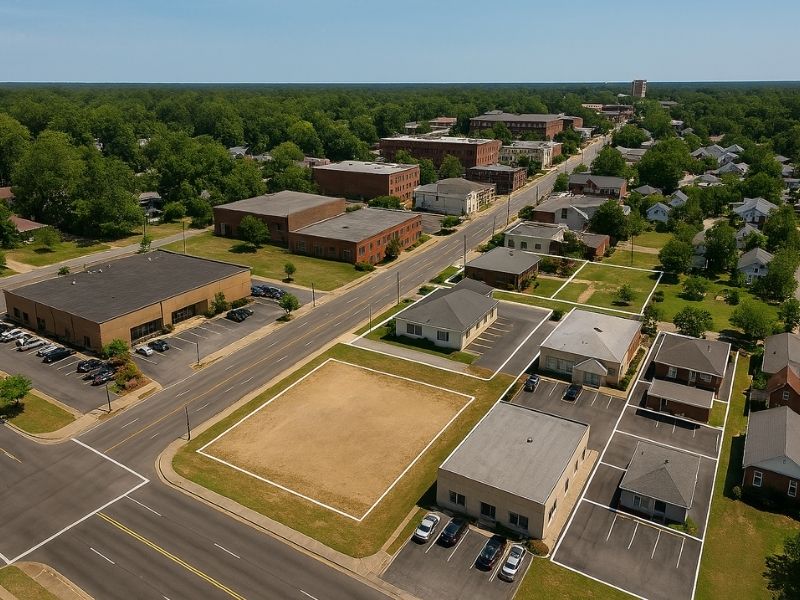
You’re under contract on a commercial property. Your lender orders a survey. The title company sends back a long list of requirements. At the top: an ALTA land survey. If you’ve only dealt with residential boundary surveys before, the scope of an ALTA can feel like a surprise. It covers a lot more ground, and for good reason. The stakes on a commercial deal are too high for a basic property line map.
What Makes an ALTA Land Survey Different
A standard boundary survey does one core job: it locates and maps property lines. That’s useful for residential closings, fence placements, and simple ownership questions. But it stops there.
An ALTA land survey (formally called an ALTA/NSPS Land Title Survey) goes much further. It follows a joint national standard set by the American Land Title Association and the National Society of Professional Surveyors. That standard exists specifically to give lenders, title insurers, and buyers a consistent, detailed picture of a property regardless of which state the transaction happens in.
Where a boundary survey confirms where your land ends, an ALTA survey documents what’s on it, what runs through it, who has legal rights to parts of it, and whether anything about it conflicts with local rules or recorded documents.
What the Base ALTA Survey Always Includes
Before any optional items are added, every ALTA survey covers several things a standard boundary survey does not.
Improvements are fully located and mapped. This means buildings, paving, parking areas, fences, retaining walls, and signage are all shown with their exact positions relative to the property lines. If a neighbor’s fence crosses your boundary by three feet, that shows up. If your parking lot extends into a utility easement, that shows up too.
Easements visible in the field get documented. That includes utility corridors, access paths, and drainage easements. Some of these appear in title records. Others are unrecorded but physically present. The ALTA survey captures both.
Access to the property is verified. The surveyor confirms how the parcel connects to public roads. If access depends on an easement across another owner’s land, that gets noted. A buyer finding out after closing that their property has no legal access to a public street is a serious and preventable problem.
Above-ground evidence of utilities is located as part of the base standard. Water meters, sewer manholes, utility poles, overhead lines, gas valves, and fire hydrants near or on the property are all shown.
What Table A Adds on Top
The ALTA standard also includes a list of optional items called Table A. These are agreed upon in writing before the surveyor starts fieldwork. Lenders and title companies typically require specific Table A items depending on the property type and transaction.
The 2026 ALTA/NSPS standards include 20 Table A items. Some of the most commonly required ones:
- Flood zone classification and Base Flood Elevation data
- Zoning setbacks, height restrictions, and buildable envelope mapped on the plat (based on a separately ordered zoning report)
- Underground utility locations (an addition to the above-ground evidence already in the base standard)
- Parking space count and dimensions
- Building square footage and exterior dimensions
- Wetland delineation for properties near water or environmentally sensitive areas
The 2026 standards added Item 20, which requires the surveyor to include a structured five-category encroachment summary directly on the plat face. This replaces the older catch-all disclaimer and gives lenders a clearer record of any encroachment issues before closing.
Adding the full standard Table A package to a base ALTA survey typically adds $500 to $2,000 to the cost, depending on which items are selected and the complexity of the site.
Why Lenders and Title Companies Require It
Title insurance policies carry a standard “survey exception” that excludes coverage for anything a current survey would reveal. When an ALTA survey is provided, the title insurer can remove that exception from the policy.
That’s a significant benefit for buyers and lenders. It means the policy actually covers encroachments, access issues, and boundary problems that a basic survey would have caught but wasn’t ordered to show.
Commercial lenders require ALTA surveys because they need that exception removed before they’ll fund. The loan depends on clean title, and clean title requires the kind of detail only an ALTA produces.
What an ALTA Survey Costs
Commercial ALTA surveys typically range from $2,500 to $10,000 or more, depending on the size and complexity of the property. A straightforward urban parcel with a single building costs less than a multi-acre mixed-use site with multiple easements, structures, and active utilities.
That’s a meaningful cost. But consider what’s at risk. A missed encroachment, an unrecorded easement, or a zoning setback violation discovered after closing can result in losses that far exceed the cost of the survey.
When You Actually Need an ALTA vs. a Boundary Survey
A boundary survey is the right tool for residential properties, fence placements, and basic ownership disputes. It’s faster and less expensive.
An ALTA land survey is the right tool when:
- You’re buying or financing commercial real estate
- Your lender or title company specifically requires one
- The property has multiple buildings, easements, or complex access
- You need title insurance with the survey exception removed
- The transaction involves investors, lenders, or parties located outside the state where the property sits
For large multifamily residential developments, ALTA surveys are also standard. A 200-unit apartment project carries the same legal complexity as a commercial deal.
Frequently Asked Questions
What is an ALTA land survey?
An ALTA land survey is a property survey that follows national standards set jointly by the American Land Title Association and the National Society of Professional Surveyors. It maps property boundaries, improvements, easements, utilities, and other physical and legal details required for commercial real estate transactions and title insurance.
What does an ALTA survey show that a boundary survey doesn’t?
A boundary survey maps property lines. An ALTA survey goes further by documenting the location of all improvements, easements (both recorded and visible), utilities, access rights, flood zone data, and optional details like zoning setbacks, building dimensions, and underground utilities. It also allows the title insurer to remove the standard survey exception from the title policy.
Who orders an ALTA survey?
The lender or title company typically specifies that an ALTA survey is required, but either the buyer or seller may be the one to hire the surveyor depending on the terms of the transaction. The Table A items required are usually dictated by the lender.
How long does an ALTA survey take?
Most ALTA surveys take two to four weeks from the date of engagement, depending on the size of the property, the number of Table A items selected, and how quickly the surveyor receives the title commitment and any prior survey documents.
What are ALTA Table A items?
Table A is a list of optional additions to the base ALTA survey. The 2026 standards include 20 items covering things like flood zone classification, underground utilities, zoning setbacks, wetlands, building dimensions, and parking counts. Lenders and title companies specify which items they require for each transaction, and each item adds to the total survey cost.
