
What Is an As-Built Survey and Why Is It Required After Construction?
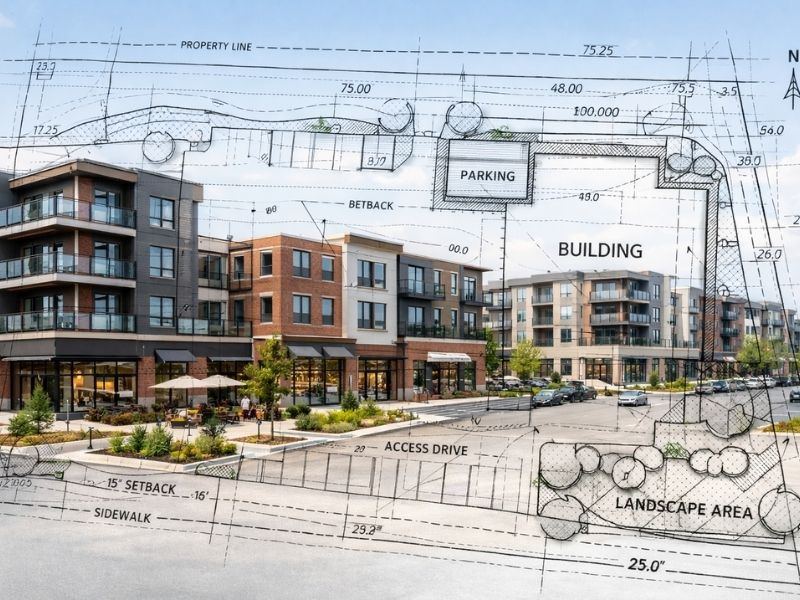
The building is done. The crew packs up. You call for a final inspection, and the building department tells you they need an as-built survey before they can issue a Certificate of Occupancy. If you didn’t plan for it, that request stops your project cold. An as-built survey is the final documentation step in most construction projects, and skipping it or scheduling it too late creates real delays. Here’s what it is, what it covers, and when you actually need one.
What an As-Built Survey Is
An as-built survey is a field survey done after construction is complete. A licensed land surveyor visits the site and measures the actual location, dimensions, and elevations of everything that was built. That data gets compared to the approved site plan and permit drawings.
The goal is simple: confirm that what was built matches what was approved.
Plans change during construction. Contractors shift a building a few feet to avoid a utility line. Grading gets adjusted for drainage. A driveway ends up in a slightly different spot. All of those changes need to be documented. The as-built survey captures the finished reality of the site, not the design intent.
Only a licensed Professional Surveyor and Mapper (PSM) under Chapter 472 of the Florida Statutes can prepare and certify an as-built survey. It’s not something a contractor, architect, or engineer can complete on their own.
What an As-Built Survey Documents
The specific content depends on the project, but most as-built surveys for new construction document:
- Building footprint location and distance to all property lines (setback verification)
- Finished floor elevation, especially critical on properties in or near FEMA flood zones
- Driveway, parking area, and impervious surface coverage
- Pool, fence, retaining wall, and accessory structure locations
- Grading, drainage swales, and retention features as constructed
- Utility service connections (water, sewer, electric) where visible or documented by the contractor
- Any deviations from the approved site plan
The surveyor checks each of these against the permit drawings and zoning requirements. If the building sits within setback tolerances and the finished floor elevation meets flood zone requirements, the survey supports the CO application. If there’s a problem, it gets flagged before occupancy is approved.
Why Municipalities Require It
Building departments require as-built surveys because inspections alone can’t verify exact measurements. An inspector can confirm that framing passes code. They can’t confirm that the structure sits exactly 7.5 feet from the side property line without a survey-grade measurement.
The as-built survey closes that gap. It gives the local building authority a certified, field-verified document showing that the finished structure complies with the approved plans, setback requirements, and any flood zone elevation rules that applied to the permit.
Most jurisdictions require an as-built survey as part of the Certificate of Occupancy package for new residential and commercial construction. Some also require it for substantial improvements to existing structures, generally defined as repairs or renovations where the cost equals or exceeds 50% of the structure’s pre-improvement market value.
For construction loans, the lender often requires the as-built survey at project closeout before releasing the final draw or converting to permanent financing. This protects the lender by confirming the collateral (the finished building) was actually built as planned.
When to Schedule It
Timing matters. The surveyor needs the site to be substantially complete before fieldwork begins. That means:
- The structure is finished and all exterior work is done
- Final grading is in place
- Driveways, walkways, and any other permanent site improvements are complete
- Utility connections are made and accessible
Scheduling the survey too early wastes money because the surveyor has to return. Most residential sites take two to four hours of fieldwork. Office processing follows. A typical residential as-built survey is delivered within five to ten business days from the field visit, though timelines vary by firm and project volume.
Plan for the survey at least two weeks before you need the CO. If the survey reveals a setback issue or a finished floor elevation that doesn’t meet requirements, you need time to resolve it before the inspection.
As-Built Survey vs. Building Inspection
These two things serve different purposes and are often both required.
A building inspection is conducted by the local building department. An inspector checks that the construction meets applicable building codes, electrical standards, plumbing requirements, and structural specifications.
An as-built survey is conducted by a licensed surveyor. It measures and certifies the physical location and elevation of the completed improvements relative to property lines, setbacks, and approved plans.
One checks code compliance. The other checks spatial accuracy. Both may be required before a Certificate of Occupancy is issued.
What It Costs
As-built survey costs range from about $500 to $2,500 or more depending on the project scope. A straightforward single-family home with a simple footprint and no flood zone requirements sits at the lower end. A larger commercial building with multiple structures, extensive site improvements, and flood zone elevation documentation sits higher.
Compared to the cost of a delayed closing or a zoning violation discovered after occupancy, the survey cost is small. Construction surveys across all phases typically run 1 to 3 percent of the total construction budget, and they prevent mistakes that can cost 10 to 50 times more to fix.
Frequently Asked Questions
What is an as-built survey?
An as-built survey is a field survey performed by a licensed land surveyor after construction is complete. It documents the actual location, dimensions, and elevations of all improvements as they were built, and compares that data to the approved site plan to verify compliance with setbacks, flood zone requirements, and permit drawings.
Is an as-built survey required for a Certificate of Occupancy?
Most building departments require an as-built survey as part of the CO package for new construction. The survey confirms that the finished structure meets required setbacks, finished floor elevations, and any flood zone compliance conditions tied to the building permit.
Who can prepare an as-built survey?
Only a licensed Professional Surveyor and Mapper (PSM) licensed under Chapter 472 of the Florida Statutes can prepare and certify an as-built survey. Contractors, architects, and engineers cannot certify this document.
When should I schedule an as-built survey?
Schedule the survey after construction is substantially complete, including final grading and all permanent site improvements. Plan for it at least two weeks before you need the Certificate of Occupancy to allow time for fieldwork, office processing, and any corrections if issues are found.
What happens if the as-built survey shows a problem?
If the survey reveals a setback violation, an elevation that doesn’t meet flood zone requirements, or an encroachment onto an easement, the building department will not issue the CO until the issue is resolved. Depending on the severity, the fix may require modifying the site, obtaining a variance, or amending the permit.
