
What Is a Topographic Survey? A Simple Guide for Homeowners
You’ve probably heard the term before. Maybe your contractor mentioned it. Maybe the city required one before approving your permit. Or maybe you are buying land and someone told you to get a topographic survey before moving forward.
But what exactly is a topographic survey, and why does it matter so much?
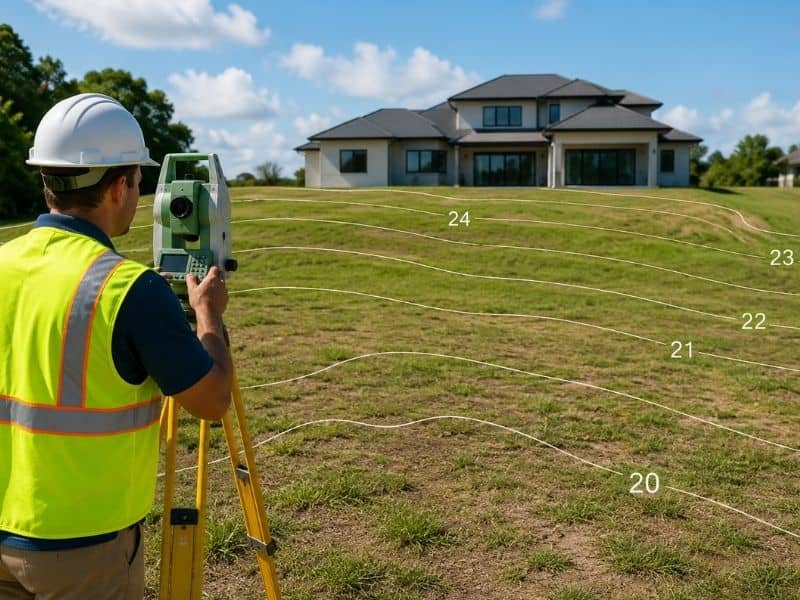
A topographic survey is a detailed map that shows the elevation, slopes, drainage patterns, and physical features of a property. Unlike a simple property boundary survey, it helps homeowners, contractors, and engineers understand how the land changes across a site before construction begins.
The good news is that it is much simpler than it sounds. Once you understand what it does, you will see why it is one of the most useful tools a property owner can have.
What Is a Topographic Survey?
A topographic survey, often called a “topo survey,” is a detailed map of your land. It shows more than just property lines. It also shows the shape and elevation of the ground itself.
The survey captures slopes, dips, flat areas, and drainage patterns across the property. It also maps physical features already on the land, including:
- Buildings
- Trees
- Fences
- Utility lines
- Sidewalks
- Drainage ditches
- Driveways
- Retaining walls
A regular boundary survey tells you where your property begins and ends. A topographic survey shows what the land actually looks like inside those boundaries.
That difference matters a lot.
Why Topographic Surveys Matter
Jacksonville has unique land and drainage challenges. Much of the city sits at a low elevation near sea level. The area also includes wetlands, creeks, canals, and flood-prone zones connected to the St. Johns River.
Because the land is so flat, even small elevation changes can create major drainage problems.
A topographic survey helps property owners understand how water moves across the site. That information becomes important before building a home, adding a pool, installing drainage systems, or buying undeveloped land.
According to FEMA flood maps, many areas throughout Duval County face moderate to high flood risks. Jacksonville also receives about 50 inches of rainfall each year, making proper drainage planning extremely important for homeowners and developers.
Even a few inches of elevation difference can affect:
- Flooding around a home
- Drainage performance
- Permit approvals
- Foundation stability
- Flood insurance costs
- Construction expenses
A topo survey gives engineers, contractors, and city officials the information they need to make safe and informed decisions.
What Does a Topographic Survey Include?
A topographic survey includes several important details about the property. These measurements help architects, engineers, and contractors plan construction correctly.
Elevation Contours
Contour lines show how the ground rises and falls across the property. Lines placed close together show steeper slopes. Lines farther apart show flatter areas.
Since Jacksonville terrain is generally flat, contour lines often appear widely spaced.
Spot Elevations
Spot elevations are exact elevation measurements taken at specific points on the property. Surveyors use these points to create accurate grading and drainage plans.
Drainage Flow Patterns
The survey shows how water naturally moves across the land during heavy rain. This helps prevent drainage issues that could damage structures or neighboring properties later.
Existing Features
Topo surveys map physical features already on the property, including:
- Homes
- Garages
- Trees
- Fences
- Utility poles
- Driveways
- Sidewalks
- Storm drains
Wetland Areas
In Jacksonville, wetland boundaries can affect where construction is allowed. A topographic survey helps identify areas that may need additional environmental review before development begins.
Benchmark References
Surveyors connect elevation readings to official reference points measured above sea level. Engineers use these benchmarks when comparing the property against FEMA flood zone data.
Licensed surveyors often use advanced GPS equipment and total stations tied to national geodetic benchmarks to gather this information accurately.
When Do Homeowners Need a Topographic Survey?
Many people think topo surveys are only for large commercial projects. In reality, homeowners often need them too.
Here are some of the most common situations where a topographic survey becomes necessary.
Building a New Home
Architects and engineers need elevation information before designing a house. A topo survey helps them understand drainage, grading needs, and possible construction challenges.
Adding a Pool, Garage, or Addition
Jacksonville building departments often require drainage and elevation data before approving permits for additions, pools, or accessory dwelling units.
Without a current topographic survey, permit approvals can slow down significantly.
Buying Vacant Land
A property may look buildable from the road but still have serious drainage or flood issues. A topo survey can reveal hidden problems before you purchase the land.
That information can save thousands of dollars in future construction costs.
Solving Drainage Problems
If water from a neighboring property flows onto your lot, a topographic survey provides clear documentation showing how the land drains.
This information often becomes important during disputes or when working with local water management agencies.
Flood Insurance Adjustments
Some homeowners use elevation information from a topo survey to support FEMA Letter of Map Amendment (LOMA) requests.
If approved, these adjustments can sometimes reduce flood insurance costs.
Topographic Survey vs. Boundary Survey
Many homeowners confuse these two types of surveys. While both are important, they serve different purposes.
| Topographic Survey | Boundary Survey |
| Shows elevation and slopes | Shows legal property lines |
| Maps drainage patterns | Identifies corners and boundaries |
| Includes physical features | Defines ownership limits |
| Used for design and permits | Used for legal property questions |
Many projects require both surveys.
Ordering both services together is often more cost-effective because survey crews can collect all the data during one site visit.
Why a Topographic Survey Protects Property Owners
A topographic survey does more than create a map. It helps property owners avoid expensive mistakes before construction begins.
Without proper elevation and drainage information, property owners may face:
- Flooding problems
- Permit delays
- Drainage disputes
- Unexpected construction costs
- Foundation issues
- Costly redesigns
A topo survey helps reduce those risks by giving everyone involved a clear understanding of the land.
In a fast-growing city like Jacksonville, that information matters more than ever.
