
Boundary Survey Basics Every Homeowner Should Know
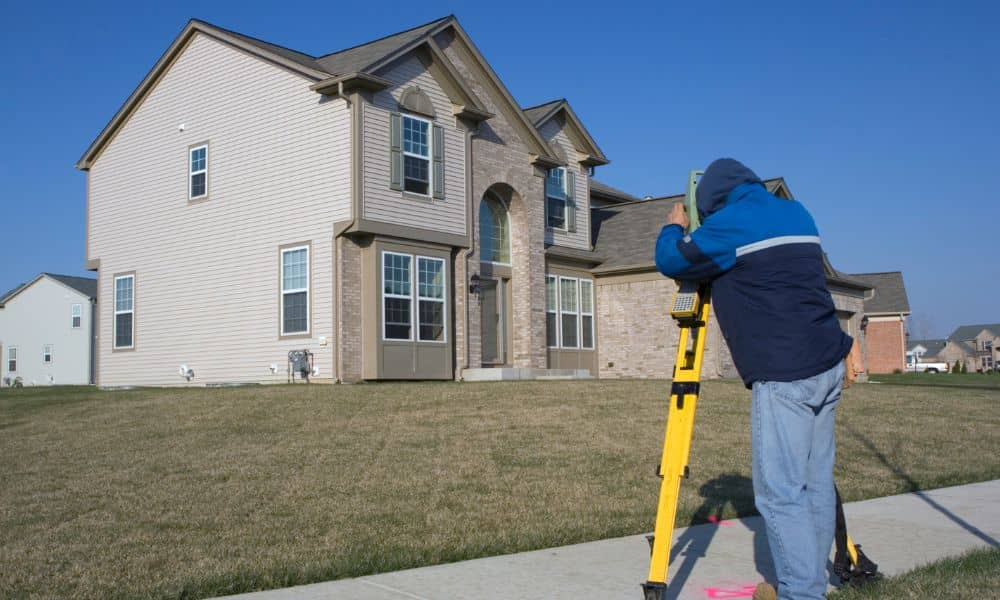
If you’ve ever bought a home, planned a fence, or had a disagreement with a neighbor over where your yard ends and theirs begins, you’ve probably heard the term “boundary survey.” But what exactly is it, and why does it matter so much?
So, What Is a Boundary Survey?
A boundary survey is an official measurement of your property’s legal edges. It defines the exact lines that separate your land from your neighbor’s, from the road, or from any other adjacent parcel.
Think of it as a GPS for your property rights. It tells you precisely where your land begins and where it ends, down to fractions of an inch.
A licensed land surveyor performs the work by researching your property’s deed, title records, and historical survey documents, then physically visiting your property to locate or set corner markers called monuments that define the boundary.
The final result is a legal document, a detailed plat or map, that can be used in real estate transactions, construction permits, legal disputes, and more.
What Does a Boundary Survey Actually Include?
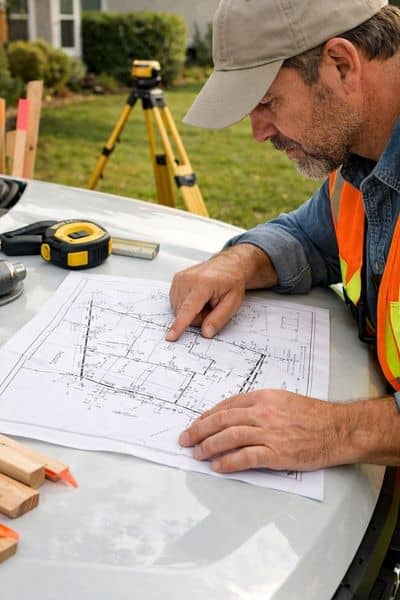
A proper boundary survey typically covers:
Corner monuments. The surveyor locates existing iron pins, concrete monuments, or other markers that define your property corners. If they’re missing or disturbed, new ones are set.
A detailed plat or map. This drawing shows your property’s shape, dimensions, boundary lines, and their relationship to adjacent properties, roads, and easements.
Encroachment identification. If a neighbor’s fence, shed, driveway, or tree is crossing onto your land, or if yours is crossing onto theirs, the survey will catch it.
Easement notation. Any legal rights others have to use a portion of your property (like a utility company’s right to access power lines) will be documented.
Deed and title research. Before setting foot on your property, your surveyor will dig into public records to understand the legal history of your land.
A Boundary Survey vs. Other Types of Surveys
Homeowners often get confused about the different types of surveys. Here’s a quick breakdown:
Boundary Survey. Establishes the legal property lines. This is what you need for disputes, fencing, construction, or when you simply want to know exactly what you own.
Location Survey (Mortgage Survey). A less detailed survey often ordered at closing by lenders. It shows the approximate location of structures on the property relative to the boundary, but it is not accurate enough to use for construction or legal disputes. Many homeowners mistakenly think this protects them. It doesn’t.
Topographic Survey. Maps the elevation and physical features of your land (hills, drainage, trees). Used for construction planning and drainage design.
ALTA Survey. A highly detailed survey required for commercial real estate transactions. It meets national standards set by the American Land Title Association.
If you’re building a fence, adding an addition, or dealing with a neighbor dispute, a boundary survey is the one you need.
Why Do Homeowners Need One?
Jacksonville is one of the fastest-growing cities in Florida. New neighborhoods are being developed, older lots are being subdivided, and construction is happening faster than ever. That growth creates real risk for homeowners who don’t know exactly where their property lines are.
Here are the most common situations where a boundary survey becomes essential:
Before installing a fence. This is the number one reason homeowners order a boundary survey. Building a fence even a few inches over the property line can result in a neighbor demanding you tear it down, at your expense.
Before buying a home. A mortgage survey is not enough. If the previous owner built a deck, driveway, or addition that encroaches on a neighbor’s property, you inherit that problem the moment you close. A boundary survey before purchase protects you.
Before building an addition or outbuilding. Jacksonville’s building permits require structures to meet setback requirements, which are minimum distances from property lines. Without knowing exactly where your lines are, you could build in violation without realizing it.
When a neighbor dispute arises. If a neighbor disputes where your yard ends, a licensed boundary survey is the most legally credible way to resolve it. Courts in Florida give significant weight to boundary surveys performed by licensed land surveyors.
Before selling your property. Unresolved boundary issues can derail a real estate closing. Discovering an encroachment during the title search is one of the most common, and most avoidable, reasons deals fall through.
When you haven’t surveyed in years. Monuments get disturbed. Fences shift. Neighbors make assumptions. If your last survey is more than 10 years old, a lot may have changed on the ground.
What Makes a Boundary Survey Legal in Florida?
In Florida, only a licensed Professional Land Surveyor and Mapper (PLSM) can perform a boundary survey. It’s not something a contractor, a GIS map, or a phone app can legally provide.
The Florida Board of Professional Surveyors and Mappers regulates the profession and sets the technical standards all surveys must meet under Chapter 5J-17 of the Florida Administrative Code. Any survey that doesn’t meet these standards is not legally defensible.
This matters because if your boundary ever ends up in a dispute, whether with a neighbor, a developer, or a government agency, only a properly executed survey by a licensed PLSM will hold up.
Can’t I Just Use Google Maps or My County’s GIS System?
This is a very common question, and the answer is a firm no, at least not for anything legally meaningful.
Online maps and county GIS tools are helpful for getting a general picture of your property, but they carry important disclaimers: they are not surveys, they are not legally binding, and their accuracy can be off by several feet. In Jacksonville, Duval County’s property appraiser maps will even tell you directly not to use them for boundary determination.
For anything involving construction, fencing, permits, or disputes, you need a licensed surveyor on the ground.
How Long Does a Boundary Survey Take?
Timelines vary depending on how complex your property is and how backed up local surveyors are. In general:
- Research and records review: 1–3 days
- Field work: 1 day for most residential lots
- Drafting the plat/map: 2–5 days
- Total turnaround: Typically 1–3 weeks for a standard residential lot
For properties with complicated title histories, large acreage, or active disputes, the timeline can extend to several weeks.
A Quick Word About Boundary Disputes in Jacksonville
Florida’s rapid growth means that encroachment issues are more common here than in many other states. Older surveys, shifting monuments, and informal agreements between previous neighbors are all part of the landscape.
Under Florida law, if someone occupies a portion of your property openly and continuously for 7 years, they may be able to claim legal ownership through adverse possession. That means an unresolved encroachment isn’t just an annoyance. It’s a ticking clock.
A boundary survey is the fastest and most affordable way to stop that clock before it becomes a courtroom problem.
Frequently Asked Questions
How much does a boundary survey cost?
The cost depends on the size of the property and how complex the survey is. Larger lots or disputed boundaries usually cost more.
Can I build a fence without a boundary survey?
You can, but it is risky. A fence built over the property line may need to be moved or removed later.
Is a mortgage survey the same as a boundary survey?
No. A mortgage survey is less detailed and not accurate enough for construction or disputes.
How long does a boundary survey last?
Surveys do not expire, but property conditions can change over time. Many homeowners update older surveys before major projects.
Can a boundary survey help with neighbor disputes?
Yes. A licensed boundary survey can clearly show where the legal property lines are located.
Can I use Google Maps instead of a survey?
No. Online maps are not legally accurate enough for fences, permits, or property disputes.
